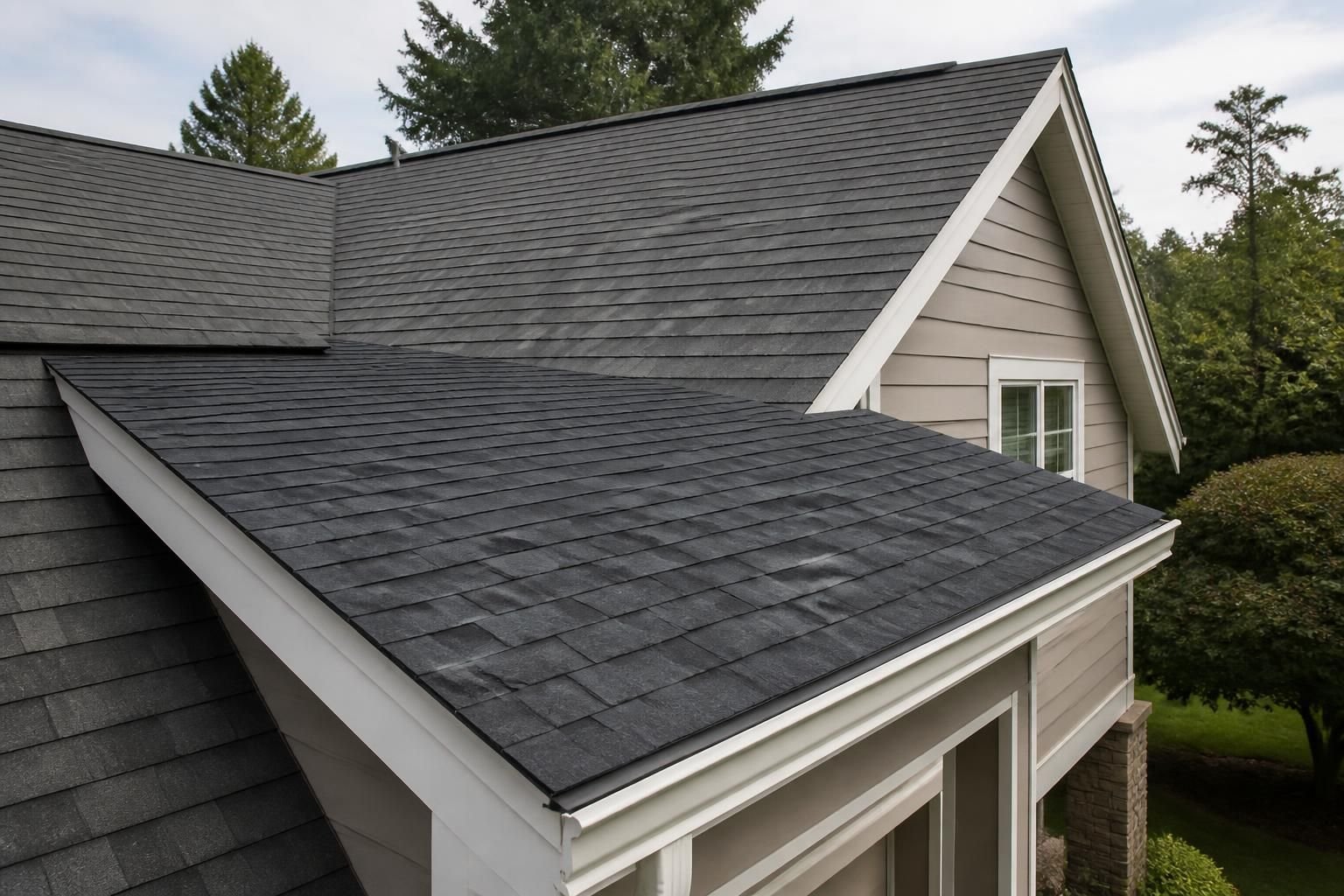
Central Texas rain does not fall gently. When a big storm rolls through Pflugerville, a lot of water hits your roof in a short time. Your gutters have one job: move it away from the house. If they are too small, water spills over the edge, runs down the siding, and pools by your foundation. Choosing the right size is a simple way to prevent that.
The Two Common Sizes
Most homes have one of two sizes. A 5 inch gutter is the most common standard. A 6 inch gutter is wider. The size refers to the width of the open top. Both are usually the K style, which has a flat back and a shape like crown molding on the front.
How Much More Does a 6 Inch Gutter Hold?
Different makers and installers quote slightly different numbers, but most agree a 6 inch gutter handles roughly 40 to 50 percent more water than a 5 inch one. That extra room matters in a downpour. It gives water more space to flow before it overflows.
Do Not Forget the Downspouts
A gutter is only as good as the pipes that drain it. A common pairing is 2 by 3 inch downspouts with 5 inch gutters, and 3 by 4 inch downspouts with 6 inch gutters. A larger downspout carries much more water. Some installers use 3 by 4 inch downspouts on 5 inch gutters to improve drainage.
Spacing matters too. A long gutter with only one downspout will overflow in the middle during heavy rain. Many guides suggest placing a downspout every 20 to 40 feet, depending on gutter size and rainfall. In heavy rain areas, closer spacing is smarter.
What Decides the Right Size?
- Roof size. A bigger roof sends more water into the same gutter.
- Roof pitch. Steeper roofs shed water faster, so the gutter receives it in a rush.
- Roof shape. Valleys funnel water from two slopes into one spot. Those spots often overflow first.
- Rainfall. Texas storms can drop heavy rain in minutes. Local peak rain, not the yearly average, is what counts.
- Trees. Leaves and debris clog gutters and cut their real capacity.
When 5 Inch Is Enough
A 5 inch gutter often works fine on a smaller home with a simple roof, a moderate slope, and good downspout spacing. If your current gutters rarely overflow, there is no reason to change them.
When to Go With 6 Inch
- You have a large roof or a complex roof with many valleys.
- Your gutters overflow during heavy rain, even when clean.
- Your roof is steep.
- Trees hang over your roof, and you get a lot of leaves.
- You want extra margin for rare, big storms.
The upgrade costs more, though not by a huge amount. One estimate puts the cost difference at around 15 percent. For many owners, the added peace of mind is worth it.
Signs Your Gutters Are Too Small
- Water spills over the front edge during storms.
- Streaks or stains on the siding below the gutter.
- Soil or mulch washed out beneath the gutter line.
- Water pooling next to the foundation.
- Rot on the fascia boards.
Why It Matters for Your Foundation
Central Texas has clay soils that swell when wet and shrink when dry. Dumping roof water right at the foundation makes this worse, and can lead to cracks and shifting. Good gutters, with downspouts that carry water several feet away, are a low cost way to protect your home.
Material and Installation
Seamless aluminum gutters are popular because they have fewer joints where leaks can start. Make sure the installer slopes the gutters slightly toward the downspouts, uses strong hangers spaced closely, and sets the gutter at the right height under the roof edge. A well sized gutter that is installed badly will still fail.
Gutter Guards
Guards can cut down on clogs, but they do not remove the need for proper size. Some guards reduce how much water gets into the gutter in a heavy storm. Ask about this before you buy.
Common Questions
Can I switch from 5 inch to 6 inch gutters without changing the roof edge? Often yes. Most 6 inch gutters fit on the same fascia board. The installer should check that the board is solid and that the new gutter sits at the right height.
Do I need to replace the downspouts too? Usually. A bigger gutter paired with a small downspout can still back up. Ask for the pairing that suits your gutter size.
How often should gutters be cleaned? At least twice a year, and after big storms if trees hang over the roof. A clogged gutter of any size will overflow.
Get It Measured
The best way to pick a size is to have a pro look at your roof, count the downspouts, and check the problem spots. Pflugerville Elite Roofing can help you decide between 5 inch and 6 inch gutters and make sure the drainage is right. Contact us for a quick look.